
What ViVE 2026 Exposed About Operationalized AI
April 16, 2026
By Anastasiia D.
AI Maturity,
AI in Production,
AI in Healthcare,
Life Sciences
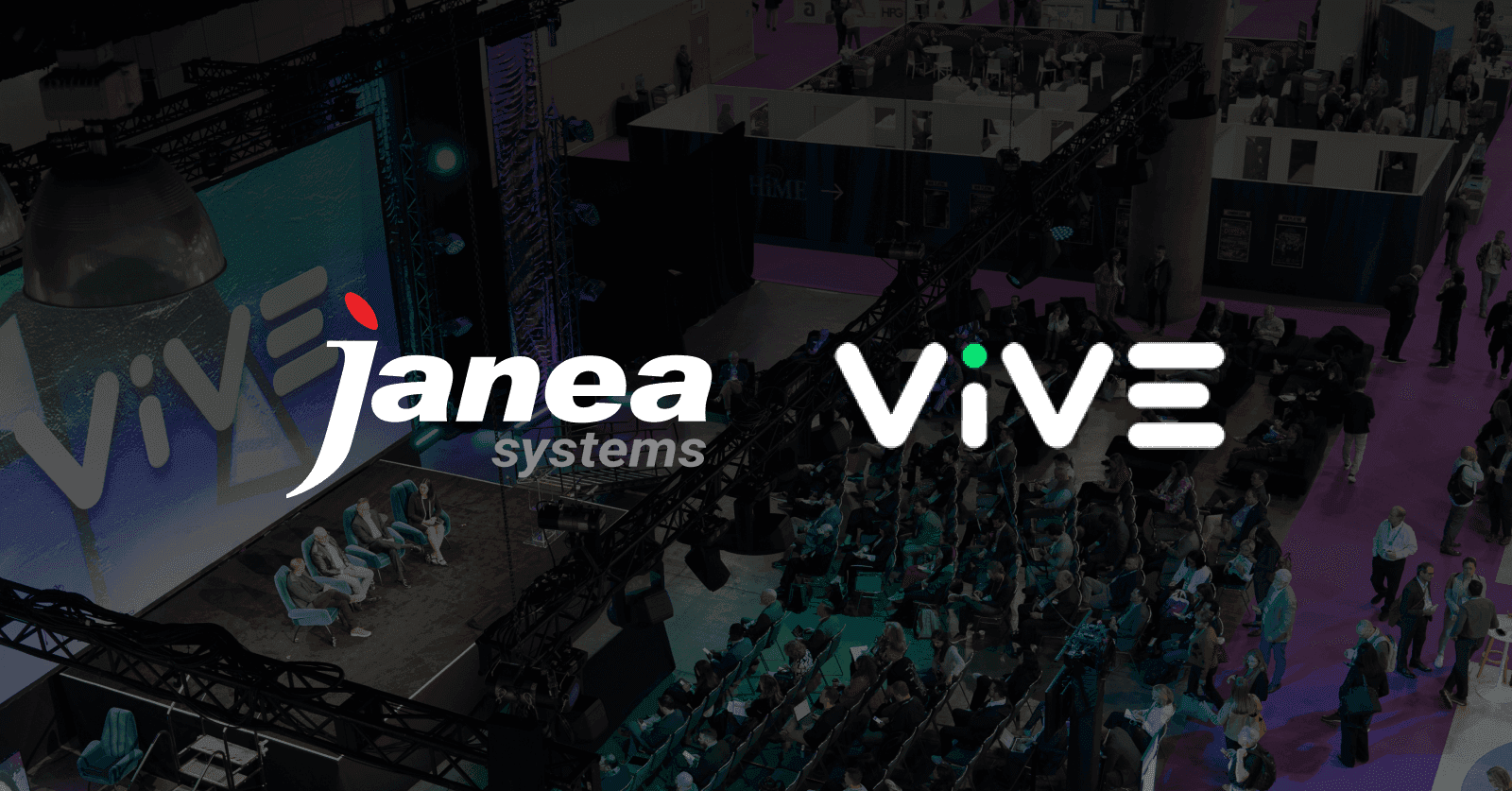
ViVe 2026, held February 22–25 in Nashville, was notable for what it didn't feature. No keynotes on foundation model benchmarks. No generative AI hype cycles. Instead, healthtech leaders spent four days on the problems that block AI adoption: fragmented governance, brittle production pipelines, and clinical workflows that weren't designed for automation.
Organized by HLTH and drawing C-suite leaders from UnitedHealth Group, Cleveland Clinic, Mayo Clinic, Philips, and Google Cloud, the conference marked a turning point: the industry is done with proof-of-concepts and is now deep in the unglamorous, essential work of operationalizing AI.
Our Business Development Executive, Mario Stalder, has attended the conference and highlighted three topics that defined the 2026 agenda:
- AI maturity and governance,
- operationalized AI in clinical settings,
- workflow automation that returns time to care.
The themes at ViVe 2026 resonated deeply with the engineering challenges we face every day. Here's what stood out.
AI Maturity Is an Organizational Problem, Not a Technical One
At ViVE 2026, one theme kept surfacing in conversations with healthcare leaders: the industry is no longer struggling with whether AI works. It is struggling with whether it can live with it. Not in the experimental sense, but in the operational one: day after day, under real constraints, with real accountability.
This reflects a broader shift already observed across industries. As explored in How to Close the AI Maturity Gap in 2026, the defining challenge is no longer access to models or even data, but the ability to move from fragmented experimentation to integrated, production-grade systems.
What makes this transition difficult is not a lack of technical capability. If anything, the opposite is true. As we mentioned in What AI Summit New York Got Right About AI in Production, there is no shortage of AI capability today. What’s missing is the infrastructure to support it. Organizations continue to accumulate pilots, proofs of concept, and isolated wins, but those rarely translate into systems that can be trusted, maintained, and scaled.
ViVE reframed this problem in organizational terms. Maturity was described not as a function of model sophistication, but as a system of accountability: governance structures, monitoring practices, and cultural readiness that ensure AI behaves predictably over time. That perspective aligns with broader industry data showing that while adoption is accelerating, governance is lagging significantly: only a minority of organizations report having mature oversight frameworks. In other words, capability is outpacing control.
Julie Durham of UnitedHealth Group and Dr. Rohit Chandra of Cleveland Clinic reinforced that maturity is now a board-level concern. AI is no longer an innovation initiative; it is an infrastructure. And infrastructure demands reliability, auditability, and ownership. The organizations that succeed are those building the discipline to sustain what they deploy.
That gap between perceived sophistication and operational fragility is something we encounter frequently at Janea Systems. It played out in our work with OtoNexus: their Novoscope device has already demonstrated strong analytical capabilities at the proof-of-concept stage. But moving from that stage to a production-ready medical device required a different kind of work. We built a code-generation pipeline to translate Python algorithms into optimized C++ for constrained hardware, established robust data pipelines into Azure, and implemented testing frameworks with strict quality thresholds.
This aligns closely with another observation explored in If AI Is So Powerful, Why Is Healthcare Still So Manual: the bottleneck is rarely the model itself, but everything around it (data pipelines, validation, compliance, and workflow integration).
Moving from PoC to production is the defining challenge of AI maturity, and it is overwhelmingly an engineering and governance challenge, not a data science one.
Stuck between a working prototype and a production-ready system? Our AI Maturity workshops are designed to identify the specific blockers and map your path to scaled deployment. Contact our team to learn more.
Operationalized AI: The Last Mile Is Where Good Models Go to Die
Everyone likes talking about training models. The part nobody loves is getting that model into a live clinical workflow without slowing people down, breaking documentation, or creating one more system clinicians have to work around.
Dr. Shez Partovi of Philips described a future where AI does not sit off to the side as yet another specialty tool. It connects imaging, pathology, and genomics into a single diagnostic layer. Dr. Suchi Saria showed something equally important: AI can act as a clinical safety net, surfacing patient deterioration before traditional signals catch up.
Both visions sound impressive. They are also easy to misunderstand.
People hear ideas like “diagnostic cockpit,” “clinical intelligence,” or “ambient AI” and imagine the hard part is the model. Usually, it is not. The hard part is operationalizing the thing. Getting the data where it needs to go, in time, in the right format, under the right permissions, into a UI that does not force a physician to stop and decode a machine’s opinion in the middle of a patient encounter.
That is the last mile. And in healthcare, the last mile is where good models go to die.
Because operationalized AI is a system that holds together under changing models, quota limits, compliance pressure, clinical validation, and the general chaos of production software. As we discussed in The Silent Killers of AI ROI: MLOps Pipeline Bottlenecks, Part 1, even strong models can fail once hidden production bottlenecks start showing up under real operating conditions.
Operationalizing AI for Oncology Practice
That is exactly the territory we had to navigate in our Healthcare AI Assistant project. It started as a Python script for AI-generated clinical summaries at an oncology practice in the US. Very quickly, that small script stopped being a side utility and became part of a business-critical workflow. The team grew from one engineer to ten in a matter of months.
The first problem was obvious to anyone who has built with modern AI APIs in production: the intelligence layer does not sit still. Traditional software is at least courteous enough to behave deterministically most of the time. Foundation-model-based systems are not. OpenAI and Azure update models, deprecate versions, change behavior, and quietly invalidate prompt assumptions you spent weeks tuning. So, the system had to be engineered for a moving target.
We explored this problem in more depth in The Silent Killers of AI ROI. Diagnosing MLOps Pipeline Bottlenecks, Part 2, where we argued that once reliability drops low enough, verification effort starts canceling out the value AI was supposed to create in the first place.
Then came the clinical reality. Every generated summary needed validation from oncologists. That meant the system could not optimize only for output quality. It had to optimize for trust, speed, reviewability, and consistency.
Then came throughput. Token quotas capped what the system could process. In our case, the limit was 50,000 tokens per minute. That may sound generous until you are processing real medical context, handling multiple concurrent workflows, and trying not to turn every request into a traffic jam.
The platform evolved into an AI medical scribe and patient charting system that analyzes patient history, generates structured clinical notes, and suggests insurance-ready medical codes. We added Ambient Listening so doctor-patient conversations could be turned into formatted documentation automatically. We also built prior authorization capabilities that answer queries, generate letters of medical necessity, and draft appeal letters fast enough to reduce admin drag on staff.
How to Operationalize Healthcare AI the Right Way
And that gets to the uncomfortable point many AI discussions still try to skate past. Operationalization is not about adding AI to a workflow. It is about rebuilding the workflow so AI can participate without making everything worse.
That means real-time data pipelines from EHR systems to inference layers. It means grounding outputs in verified medical literature. It means ambient capture that does not create more noise than value. It means UI decisions that respect cognitive load.
This project worked because our team approached it like an engineering problem first. We used rapid prototyping to de-risk requirements early, often putting functional prototypes with real UI and dummy data in front of stakeholders within 24 hours. We also kept the focus on the clinician’s actual workflow rather than on whatever capability looked most impressive in isolation.
That last part is easy to say and strangely rare in practice.
AI teams love asking, “What can the model do?” They should spend more time asking, “What does the clinician need, what will they trust, and what can survive production next month after the vendor changes an endpoint, the quota gets hit, and the workflow expands again?” And it is still where most of the work is.
If your team is stuck between a promising prototype and a production-grade system, our AI & MLOps consulting services help close that gap. Our ML engineers design and optimize inference pipelines, production deployments, monitoring, and validation workflows so AI systems stay reliable as models, traffic, and requirements change. Get in touch via the content form to learn more.
Workflow Automation: Reclaiming Time, Retaining Talent
Workflow automation is usually sold as an efficiency play. That is too small. At ViVe 2026, the more interesting framing was this: automation is a staffing strategy. A retention strategy. In some cases, a survival strategy.
Because healthcare does not have an abstract “workflow problem.” It has a labor problem with workflow consequences. Nurses are buried in administrative friction. Back-office teams are trapped in repetitive revenue-cycle tasks. Member services teams spend their days bouncing between routine questions and emotionally complex cases, often with incomplete context and too many systems open at once.
The value of automation is not just that it speeds things up. It changes the job. It makes the environment less chaotic, less administrative, and less exhausting. In a labor market where experienced clinicians have options, that matters.
When people talk about giving time back to care, this is what they mean. And that was the point behind the flagship session, "Reimagining Nursing Workflows: Giving Time Back to Care," featured by Cheristi Cognetta-Rieke of Mayo Clinic and Lisa Gulker of Oracle.
"Combining Automation & Human Expertise to Improve Member Services," featuring leaders from TAG and Clever Care Health Plan, explored the "bionic" model where AI handles 80% of routine inquiries while the remaining 20% are seamlessly transitioned to a human expert primed with full context by the AI.
That is a much better model than the usual fantasy of full automation. Most real workflows don’t need AI to do everything. They need a system that knows what to automate, what to escalate, and how to keep humans from drowning in the transitions. As we explored in How to Fix LLM Workflow Automation that Breaks in Production, scaling automation is usually a systems problem before it becomes a model problem.
Workflow Automation in Healthcare RCM
The same logic shows up on the financial side. The "Building Better RCM Automation Workshop" focused on a question most organizations should ask more often: where does automation pay back fastest? Turns out, revenue cycle processes: eligibility verification, denial management, and prior authorization offer the highest automation ROI in the first 90 days.
That maps directly to the systems we have built.
The RCM platform we designed handles the claim lifecycle end to end: generating medical codes from clinical notes, submitting claims to insurers, tracking reimbursement status, and giving teams visibility into what is happening across the pipeline. And it supports roughly ten billing teams overseeing about $200 million in annual revenue.
At that scale, workflow automation is not nice to have. And that is the part people miss when they talk about automation too casually. They imagine convenience. But the real gain is structural.
That is especially important in healthcare, where “manual” does not always mean thoughtful and “automated” does not always mean reckless. Very often, manual means inconsistent, duplicated, and dependent on overextended staff doing heroics to keep things moving. Good automation removes the need for heroics.
It also creates a better division of labor between people and machines.
The machine should do the repetitive, trackable, rules-heavy work. Humans should do the work that benefits from judgment. That is the whole point of automation.
The Novelty Phase Is Over
Healthcare AI is no longer competing for novelty points. What matters now is whether the technology can take pressure off real workflows without creating new pressure somewhere else.
That is a much higher bar.
As we showed in AI in Life Sciences and Healthcare: 13 Use Cases & Results, the question is no longer whether use cases exist, but whether organizations can operationalize them reliably.
It means the winners in this space will be the ones who can turn promising tools into dependable operating systems for clinical and administrative work. Systems that fit the workflow, respect the regulatory environment, and earn trust by being useful on ordinary Tuesdays, not just in boardroom presentations.
That is the work all companies should focus on. And honestly, it is the work that matters most.
It is also the work we know well. Janea Systems brings hands-on medtech expertise, from building AI-powered clinical workflow systems to optimizing diagnostic devices and creating data pipelines. Reach out via the contact form below to get a free consultation from our medtech experts.
Related Blogs
Let's talk about your project
Let's talk about your project
Ready to discuss your software engineering needs with our team of experts?